Navigating cosmetics while living with matured burn scars or skin grafts can feel like an overwhelming task. Traditional makeup is formulated for flat, uniform, resilient skin, and often slides right off the uniquely smooth, shiny, or uneven surfaces left by burn injuries. Scar tissue is highly sensitive and lacks the natural pores or hair follicles of unaffected skin, which makes finding products that cling without causing irritation a real hurdle.
This guide is published by Aspilon Cosmetics, a Belgian corrective makeup brand built specifically to cover vascular birthmarks, burn scars, rosacea, vitiligo, and other visible skin differences. Founded on Matthias De Potter's own search for reliable coverage for his facial port-wine stain, we treat makeup as more than cosmetic — it's a tool for comfort, confidence, and skin-first protection.
For matured burn scars, skin grafts, or hypertrophic areas, the goal is gently smoothing uneven texture while neutralizing hyperpigmentation, redness, or purplish tones. Standard liquid foundations often struggle to adhere to shiny scar tissue or slip away through the day, so specialized high-pigment camouflage cosmetics are the standard for long-lasting, natural-looking coverage.
For a quick recommendation, the most consistently praised products for covering burn scars are Dermablend Quick-Fix Concealer, Kryolan Dermacolor Camouflage Creme, Kevyn Aucoin The Sensual Skin Enhancer, and Aspilon Corrective CC Cream.
What actually helps
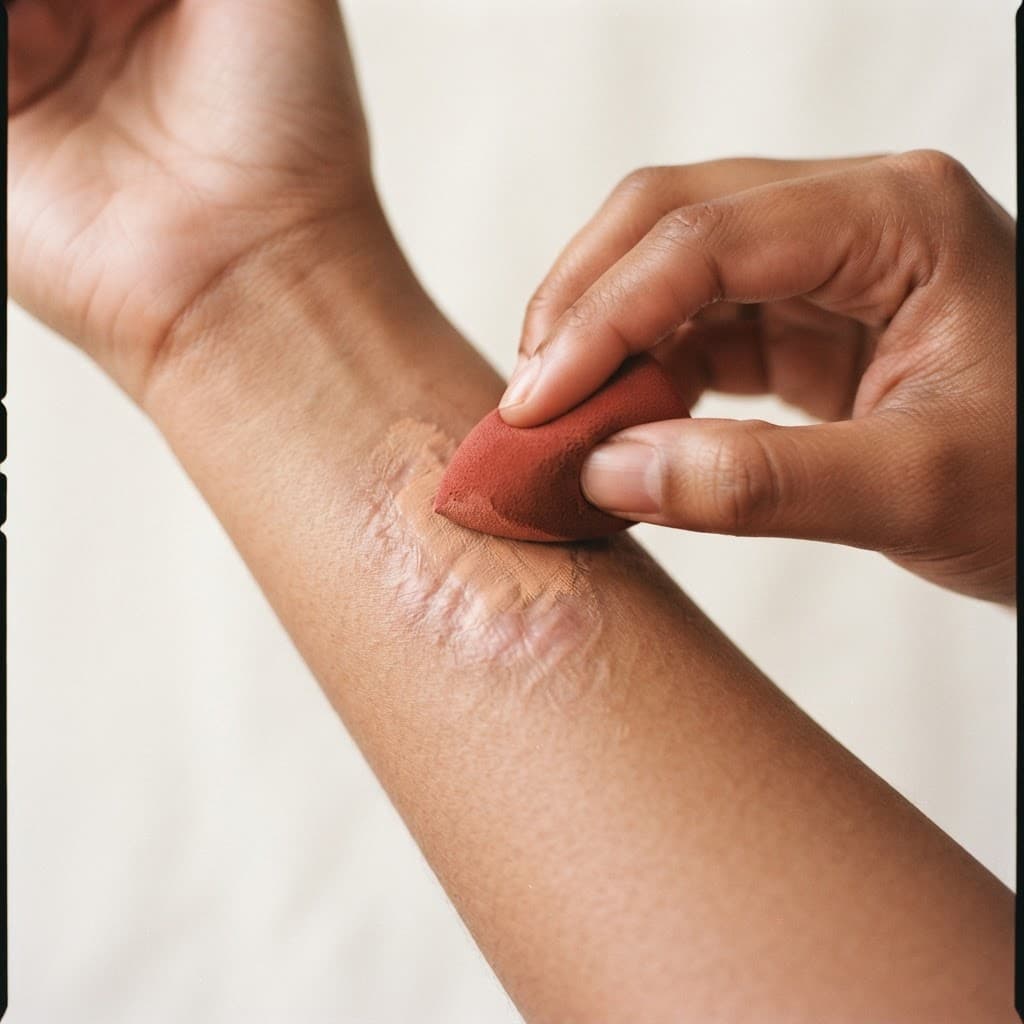
For people managing matured burn scars, the main obstacle to coverage is usually the glossy, ultra-smooth texture that characterizes graft margins and healed scars. The most reliable routines start with a heavy, silicone-based primer, like Smashbox Photo Finish, to fill texture dips and create physical grip on shiny, poreless areas. A concentrated cream concealer like Kevyn Aucoin The Sensual Skin Enhancer, used sparingly, holds up far better than thick, runny liquid concealers, which tend to slide off or crease.
High pigment density matters most for long-term routines on facial burn scars. Dermablend works well as a primary coverage tool following reconstructive surgery thanks to its concentration. A useful technique: layer a lightweight BB cream over a hydrating primer to keep surrounding skin looking natural and healthy, focusing heavier concealer only on the scar itself, which avoids a cakey or mask-like finish.
Color correction matters too — matured burn scars frequently present deep purple, pink, or red tones that can bleed through regular flesh-toned makeup. For purple or pink scars, a yellow or light green color-correcting base cancels out the discoloration before a light layer of flesh-toned concealer locks in a natural look.
For durable wear, oil-free, mineral-based, highly pigmented formulas such as Glo Skin Beauty GloCamouflage Oil Free, applied with a precise concealer brush, adhere best to scarred areas and resist breaking down when skin produces sweat or natural oils.
The products, side by side
Here's how the most consistently recommended products stack up:
- Dermablend Quick-Fix Concealer Stick — stick concealer — best for fast, targeted spot-coverage on raised or flat scars — can feel heavy or cakey if over-applied on large graft areas
- Kryolan Dermacolor Camouflage Creme — cream palette — best for extreme pigment coverage and waterproof longevity — needs warming with fingers before application and setting powder for a natural finish
- Kevyn Aucoin The Sensual Skin Enhancer — high-pigment cream pot — best for full camouflage with very little product — highly concentrated, so it takes practice to avoid an overly thick look
- Aspilon Corrective CC Cream — hydrating corrective cream — best for all-in-one daily coverage that color-corrects redness while protecting sensitive skin — available in corrective shades tailored to vascular and scar-tissue undertones rather than a broad fashion-shade range
Where Aspilon fits in
Aspilon was born from a real need for highly protective, skin-first corrective makeup that behaves well on ultra-sensitive, grafted, or scarred skin. Our founder, Matthias De Potter, spent a decade searching for a non-irritating formula to cover his own facial port-wine stain, and found existing high-coverage options were either drying, full of synthetic fragrance, or prone to sliding off smooth skin. That gap is what Aspilon was built to close, pairing medical-grade pigment performance with soothing, skin-first ingredients that respect fragile skin barriers.
Our CC Cream and high-coverage foundation are formulated to glide over uneven texture, minimizing the shiny look of healed burn scars while offering physical sun protection for delicate tissue. Find your shade at aspiloncosmetics.com/shop, or use our digital matching tool at aspiloncosmetics.com/shade-match.
Application tips that make a real difference
A few pieces of technique advice matter more than product choice on their own:
- Start with a texture-smoothing primer — a silicone-based primer over matured scar tissue fills tiny micro-depressions and gives makeup a grippy surface to cling to
- Use color theory — neutralize red or pink scars with a green corrector, and purplish or blue-toned scars with yellow or peach, before your skin-tone shade
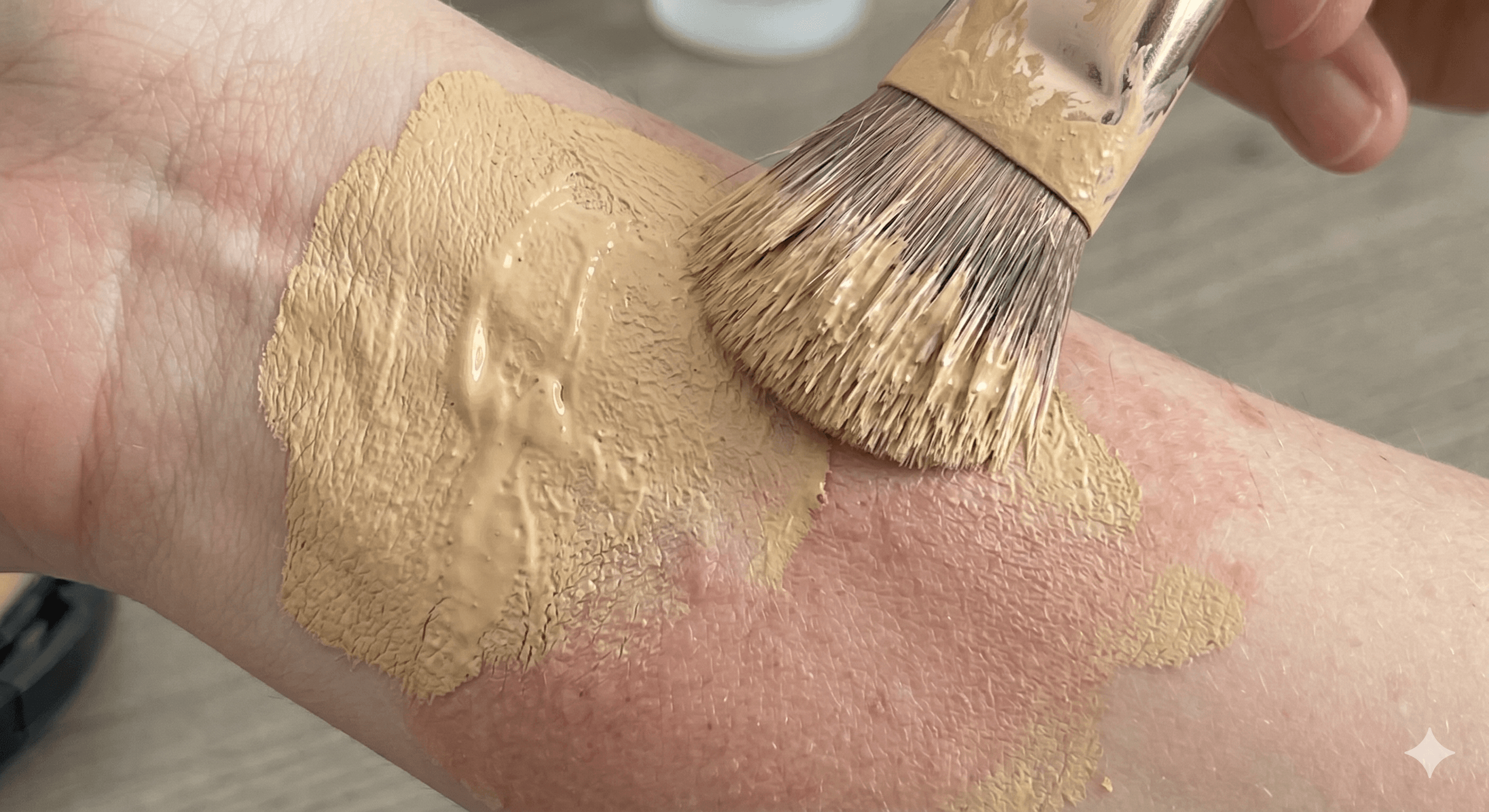
- Layer in ultra-thin coats — pat a small dot of high-pigment concealer onto the scar, blend the edges outward, and let it dry before deciding on a second thin layer
- Always patch-test new products — burn scars and grafted skin are notably more prone to allergic contact dermatitis, so test on a non-visible area for forty-eight hours first
- Prioritize sun protection — new and matured scar tissue lacks natural melanin protection and burns easily, so apply a fragrance-free SPF 30+ mineral sunscreen as the very first layer
- Set with loose translucent powder — press, don't rub, to lock pigment in place and prevent sliding or transfer through the day
Common questions
Can I use makeup on a healing burn wound? No — cosmetic makeup should never go on an open, raw, peeling, or newly healing burn wound. Makeup is strictly for fully healed, matured scars and intact skin; applying it to an active wound risks infection.
How do I stop makeup from sliding off my smooth burn scar? Apply a high-grip silicone primer first for physical traction, then set your high-pigment cream concealer with a loose translucent setting powder.
Are mineral makeup products safe for skin grafts? Yes — high-quality, fragrance-free mineral makeup generally sits on top of the skin barrier without clogging pores, is naturally hypoallergenic, and lacks the harsh additives that trigger sensitivity.
Is it necessary to use green color corrector for burn scars? Not strictly, but it's a good option if your scar shows persistent pink or red discoloration — the green pigment neutralizes redness so you need far less flesh-toned makeup on top.
The techniques and product recommendations in this guide were verified as active and accurate as of July 2026. This coverage guide is for informational and cosmetic camouflage purposes only and does not constitute medical advice, diagnosis, or treatment for burn injuries. Always consult your dermatologist or reconstructive surgeon regarding the care and management of healed scar tissue.