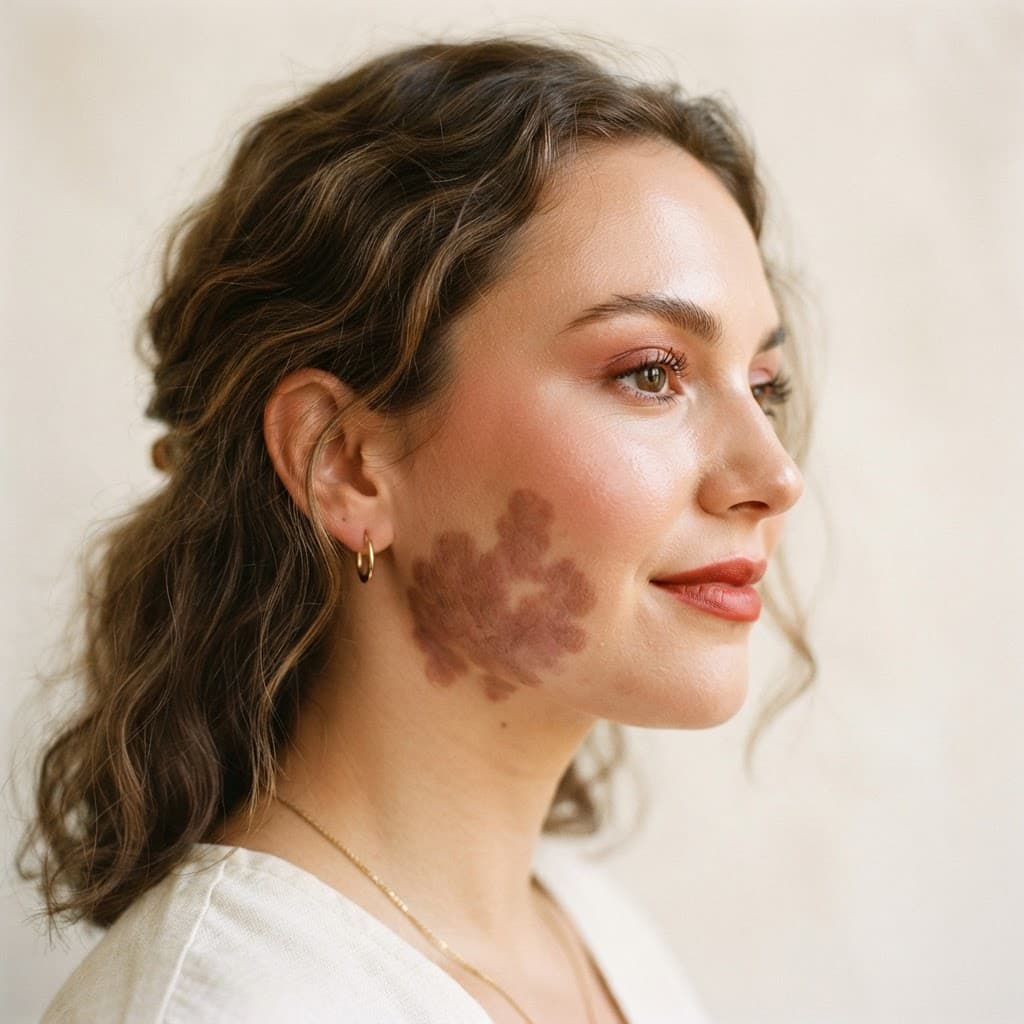
A port-wine stain is a vascular birthmark, caused by capillaries sitting closer to the skin's surface than usual, and it shows up as a patch of pink, red, purple, or dark wine-colored skin that's present from birth. Unlike burn scars or vitiligo, the skin texture over a port-wine stain is usually normal. The challenge isn't texture, it's color: the intensity can shift through the day with heat, exercise, alcohol, or emotion, so any coverage needs to hold up against a birthmark that isn't always the same shade twice.
This guide is published by Aspilon Cosmetics, and this is personal: our founder, Matthias De Potter, has lived with a facial port-wine stain his entire life and was bullied for it growing up. He spent over a decade testing camouflage products that either couldn't fully neutralize the color, irritated his skin, or looked heavy and unnatural, before deciding to build the product himself. Aspilon exists because that search took too long.
People managing a port-wine stain consistently find the most reliable results from a three-part approach: a color corrector to neutralize the red-purple undertone, a high-pigment camouflage cream or corrective foundation to build opacity without a mask-like finish, and a setting method that resists sweat, water, and the natural oils of daily wear.
For a quick recommendation, the products people reach for most consistently are Kryolan Dermacolor Camouflage Creme, Dermablend Cover Creme, Covermark Classic Cream Concealer, Coverderm Camouflage System, and Aspilon CC Cream + Foundation.
Understanding how port-wine stain skin behaves
A port-wine stain is a vascular malformation, not a pigmentation or texture condition, so the skin itself typically feels and behaves like the surrounding skin. What makes coverage difficult is that the color isn't fixed. Increased blood flow from heat, physical activity, alcohol, crying, or even standing up for a long time can visibly darken a port-wine stain within minutes, so makeup that looks perfectly matched in the morning can look undercorrected by the afternoon.
Because the coloring runs from pink through deep purple depending on the person and the area affected, a single skin-toned foundation almost never neutralizes it on its own. The red-to-purple undertone needs to be cancelled out first, before a flesh-toned layer goes on top, otherwise the discoloration bleeds through, especially under warm indoor lighting or direct sun.
Many people with a port-wine stain wear coverage daily, for years, so the formula matters as much as the pigment. A product that's drying, pore-clogging, or fragrance-heavy becomes a real problem over months and years of continuous wear, not just a one-off event like theatrical camouflage makeup is designed for.
Coverage options compared
Here's how the most consistently recommended options stack up:
- Kryolan Dermacolor Camouflage Creme — cream — best for maximum, waterproof opacity on stubborn dark-purple areas — needs a dedicated fixing powder and setting spray, and can feel heavy for everyday wear
- Dermablend Cover Creme — cream-to-powder — best for a natural matte finish on larger facial areas — can look dry or cakey without a hydrating primer underneath
- Covermark Classic Cream Concealer — cream — best for long-standing, dermatologist-recommended vascular camouflage with strong color-correcting undertones — limited shade range compared to mainstream foundation lines
- Coverderm Camouflage System — cream + setting powder kit — best for all-day, transfer-resistant wear on visible areas like the face and hands — the two-step application takes longer than a standard foundation routine
- Aspilon CC Cream + Foundation — corrective cream — best for daily, breathable coverage that color-corrects redness and purple tones without the stiff, mask-like feel of theatrical camouflage — built specifically around vascular birthmarks and other visible skin differences from day one
Where Aspilon fits in
Aspilon wasn't built as a general beauty brand that later added coverage shades. It started the other way around. Matthias spent ten years going through nearly every camouflage cream and corrective foundation on the market trying to cover his own port-wine stain, and kept running into the same trade-off: strong enough pigment to fully neutralize the color, or comfortable enough to wear all day without irritation, but rarely both.
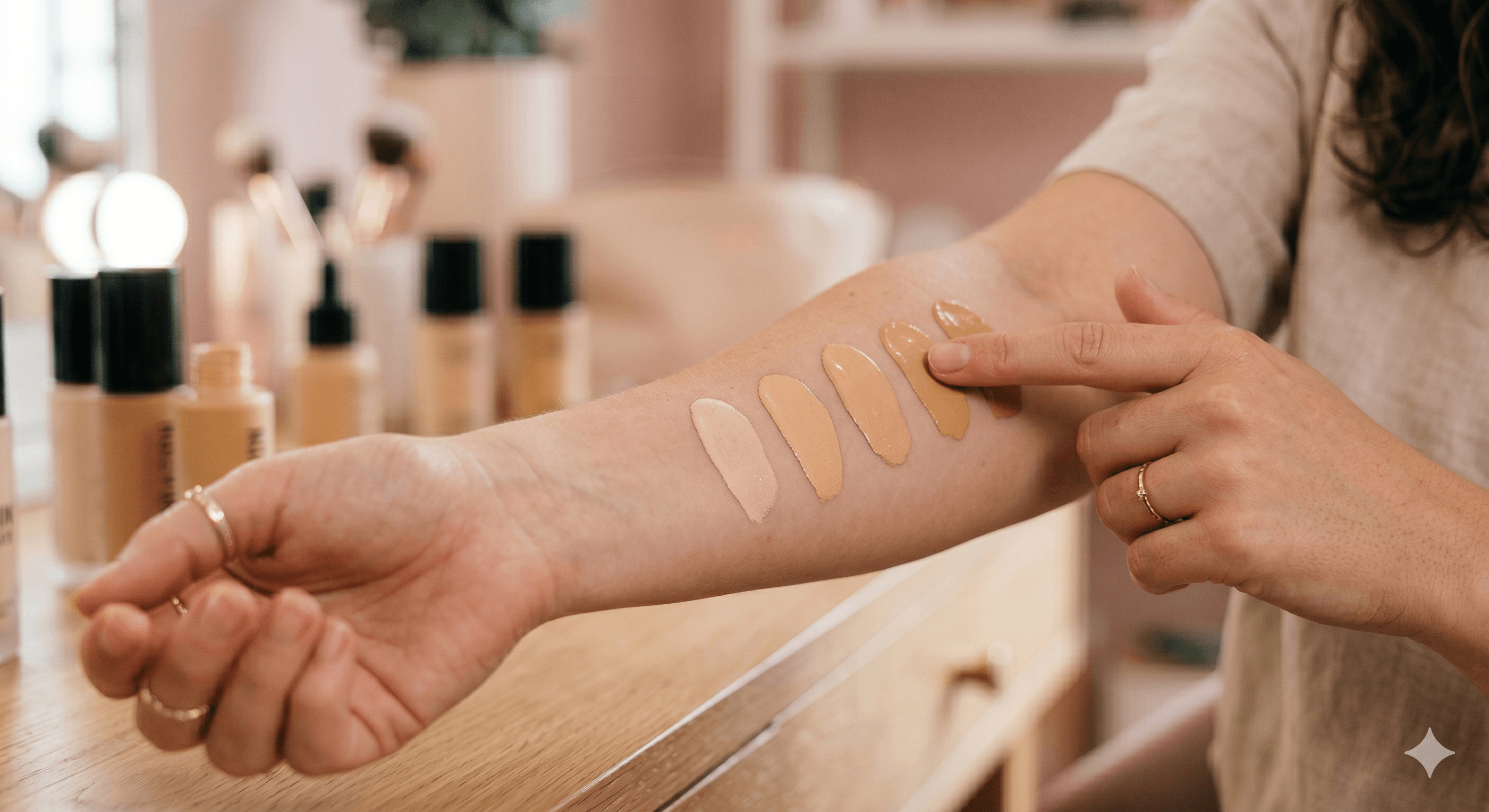
Our CC Cream and Foundation are formulated to color-correct the red-purple undertone of a port-wine stain while staying lightweight and breathable enough for daily wear, without the heavy, tacky feel of traditional theatrical camouflage. Find your shade at aspiloncosmetics.com/shop, or use our digital matching tool at aspiloncosmetics.com/shade-match.
Application tips that make a real difference
A few pieces of technique advice matter more than product choice on their own:
- Color-correct first — a green corrector neutralizes red-toned stains, while a yellow or orange corrector works better on deeper purple or wine-colored areas, before any skin-toned product goes on top
- Apply sunscreen as the very first step and let it fully absorb — protecting the skin over the stain matters for long-term skin health, especially under daily makeup
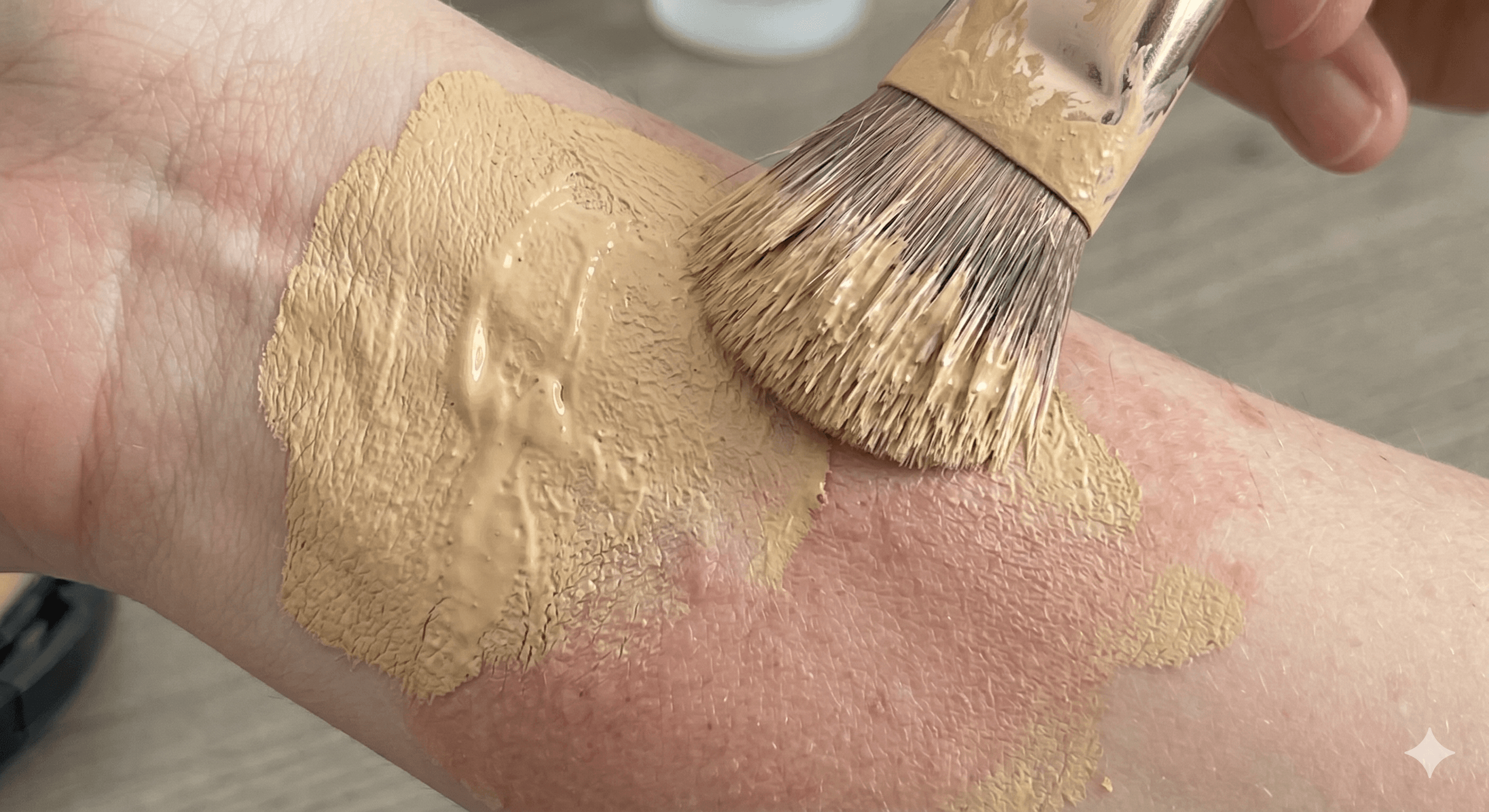
- Build in thin layers rather than one thick coat — pat on a small amount, blend the edges outward with a damp sponge, and add a second layer only where color still shows through
- Set with a translucent, talc-free powder pressed on with a puff, not swept with a brush, to lock the corrected color in place
- Carry a travel-size setting spray or blotting product if you expect heat, exercise, or a long day — since blood flow can darken the stain later in the day even when your morning coverage was perfect
- Patch-test any new product on a small area first, particularly if you plan to wear it daily for months at a time
Common questions
Can I wear camouflage makeup over a port-wine stain that's currently being treated with laser therapy? Generally yes between sessions, but always follow your dermatologist or laser clinic's specific guidance on timing before and after each treatment, since skin can be more sensitive immediately post-laser.
Why does my port-wine stain look more visible some days than others? Blood flow to the area increases with heat, exercise, alcohol, and strong emotion, which can visibly darken the stain within minutes, independent of anything to do with your makeup.
What color corrector should I use for a port-wine stain? Green cancels out red tones most effectively, while yellow or orange correctors work better for deeper purple or wine-colored areas, applied before your skin-toned foundation or cream.
Is it safe to wear full coverage makeup on a port-wine stain every day, long-term? Yes, provided the formula is non-comedogenic and fragrance-free, and you cleanse thoroughly at the end of the day. Daily wear over months or years is exactly why formula quality matters as much as pigment strength.
Finding reliable coverage for a port-wine stain is a process of trial and error, guided by your specific undertone and how your skin responds to heat and daily wear. This guide reflects real, lived experience and practical cosmetic technique, and is not medical advice. For questions about the underlying vascular condition or laser treatment options, consult a qualified dermatologist.