Managing skin with vitiligo is a deeply personal journey, shaped by the unique patterns, locations, and contrast levels of depigmented patches. Whether the goal is full camouflage or simply softening the contrast, cosmetic camouflage can be genuinely difficult to get right. Standard beauty products often fall short, lacking the pigment density needed or sliding off due to the different texture and lower natural oil of depigmented skin.
This guide is published by Aspilon Cosmetics, and Aspilon makes corrective makeup itself, born from our founder Matthias De Potter's own decade-long search for high-performance camouflage to cover his port-wine stain birthmark. Our aim is clear, practical, skin-first guidance for anyone looking for reliable coverage options.
People managing vitiligo consistently find success with a few approaches. Rather than one heavy layer of traditional foundation, the most effective routines combine targeted color correction, high-pigment camouflage creams, or semi-permanent skin stains, matched to how each formulation interacts with depigmented skin.
What actually works best comes down to three approaches: pigment-rich camouflage creams that physically cover the patch, specialized skin stains or self-tanners containing dihydroxyacetone (DHA) that dye the outer skin layer, and color-correcting tones that balance the cool, blue-pink undertones often found at depigmented edges.
Understanding how depigmented skin behaves
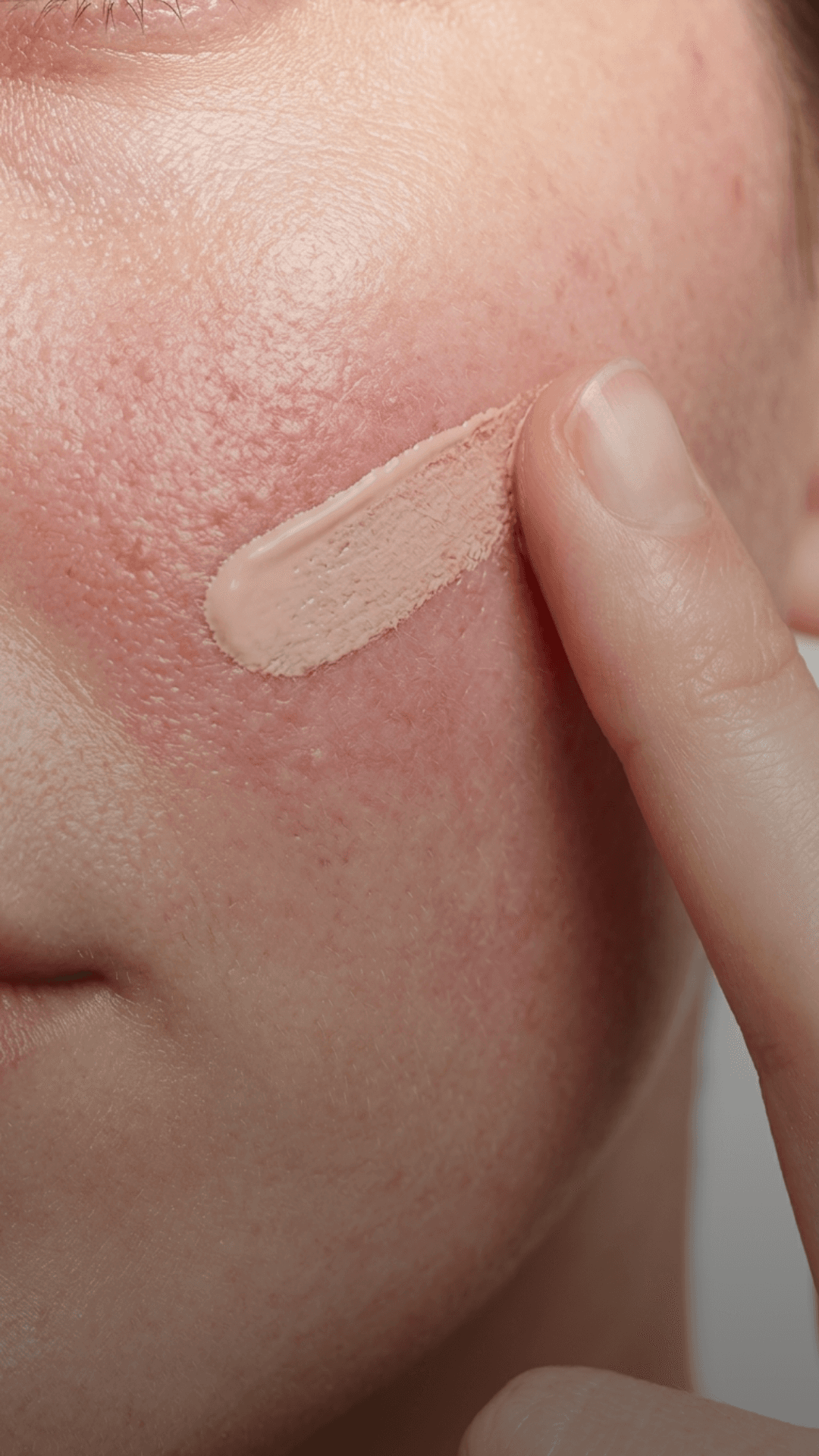
Depigmented patches behave differently under cosmetics than the surrounding skin. Without melanin, they often also lack the natural lipids and sebum of pigmented skin, so they can feel drier and smoother. That lack of texture makes it harder for standard liquid foundation to adhere, leading to sliding, patching, or a cakey look. And because there's no baseline pigment, a standard foundation applied directly can leave a grayish or ash-toned cast as the stark white undertone shows through.
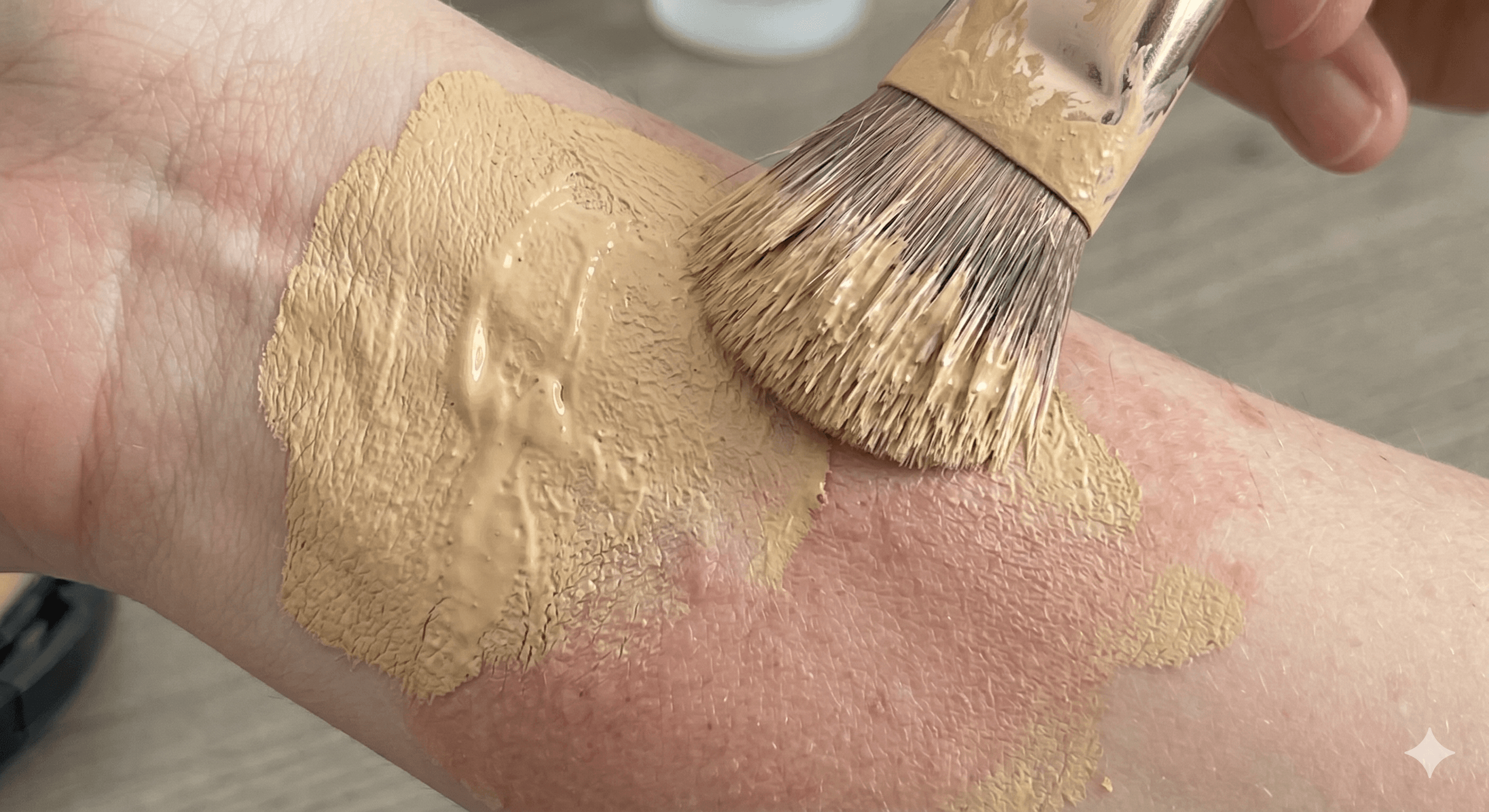
The more effective approach skips piling on thick layers of standard makeup. Instead, it primes the skin into a receptive, hydrated canvas, then uses specialized, high-pigment products. Concentrated camouflage creams run forty to fifty percent pigment, compared to roughly fifteen percent in a standard drugstore foundation, so far less product is needed for full opacity, without the heavy buildup that cracks or rubs off.
Waterproofing is the other major challenge. Depigmented patches lack melanin's natural UV protection, so sunscreen is non-negotiable, but sunscreen underneath makeup can make it break down and slide. Products formulated to bond with setting powders into a water-resistant finish matter most for all-day reliability, especially on hands, face, or neck.
Coverage options compared
Here's how the most consistently recommended options stack up:
- Kryolan Dermacolor Camouflage Creme — cream — best for durable, maximum-opacity coverage on face and body — needs a specialized fixing powder and spray to be waterproof, which can feel heavy for daily wear
- Dermablend Professional Cover Creme — cream — best for larger facial patches with a natural cream-to-powder finish — can look cakey or dry if skin isn't deeply moisturized first
- Viticolor Skin Camouflage Gel — gel stain — best for long-lasting, semi-permanent color on face and body that doesn't rub off on clothes — can take hours to fully develop, and exact shade matching needs precise, gradual layering
- Chromelin Complexion Blender — liquid stain — best for darkening depigmented patches on hands and body with a waterproof base lasting several days — the watery consistency makes precise edge application tricky, risking staining surrounding skin
- Estée Lauder Double Wear Stay-in-Place Foundation — liquid — best for mild vitiligo contrast or evening out the whole face with a natural matte finish — won't fully opacify high-contrast white patches without a separate concealer
Where Aspilon fits in
Specialized camouflage creams and skin stains offer high opacity, but many people want an everyday, skin-first alternative between heavy theater makeup and standard low-coverage cosmetics. That's the gap Aspilon was built for. Our founder, Matthias De Potter, spent ten years searching for a product that could cover his own port-wine stain birthmark without irritating his skin, so Aspilon was developed around sensitive, corrective needs from the start.
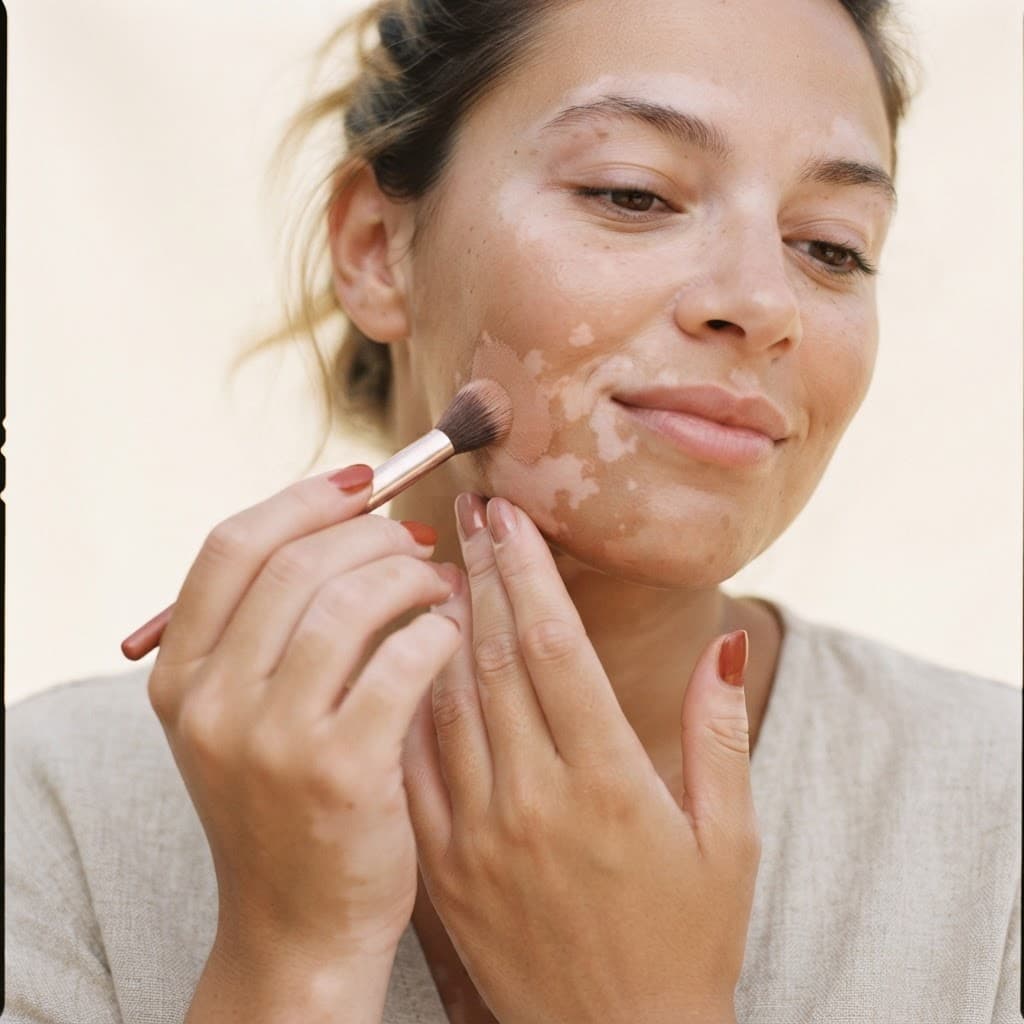
Our CC Cream and Foundation deliver buildable, high-pigment coverage that softens the contrast of vitiligo patches, birthmarks, and other visible skin differences, in a lightweight, breathable, stable formula, without the stiff, mask-like feel of traditional camouflage creams. Find your shade at aspiloncosmetics.com/shop, or use our digital matching tool at aspiloncosmetics.com/shade-match.
Application tips that make a real difference
A few pieces of technique advice matter more than product choice on their own:
- Apply a broad-spectrum, non-greasy sunscreen at least fifteen minutes before makeup, letting it fully absorb so it doesn't interfere with cosmetic adhesion
- Use a gripping, hydrating primer specifically on depigmented patches to create a slightly tacky surface that helps high-pigment creams stick to smooth, sebum-deficient skin
- Color-correct first — a warm peach, orange, or dark brown corrector on white patches before foundation neutralizes the cool, stark white undertone and prevents a gray cast
- Feather and blend the edges outward into pigmented skin with a damp beauty sponge to avoid harsh lines of demarcation
- Lock cream products in place with a finely milled, talc-free setting powder, pressed and rolled with a puff rather than swept with a brush, which can disturb the coverage
- For hands or neck, mist the finished look with a professional fixing spray for a sweat-resistant, transfer-proof seal
Common questions
How do I prevent my camouflage makeup from looking gray over white patches? Neutralize the cool, white undertone first with a warm peach, orange, or terracotta color corrector before applying your skin-toned foundation.
Can I use self-tanner or skin stains to cover vitiligo patches? Yes — specialized skin stains and self-tanners containing dihydroxyacetone safely dye the outer layer of depigmented patches, giving a semi-permanent, waterproof base that lasts several days and doesn't rub off on clothing.
How can I make my coverage last on my hands and fingers? Use a highly pigmented, wax-based cream, set it heavily with a specialized fixing powder, and seal with a waterproof fixing spray to resist handwashing and friction.
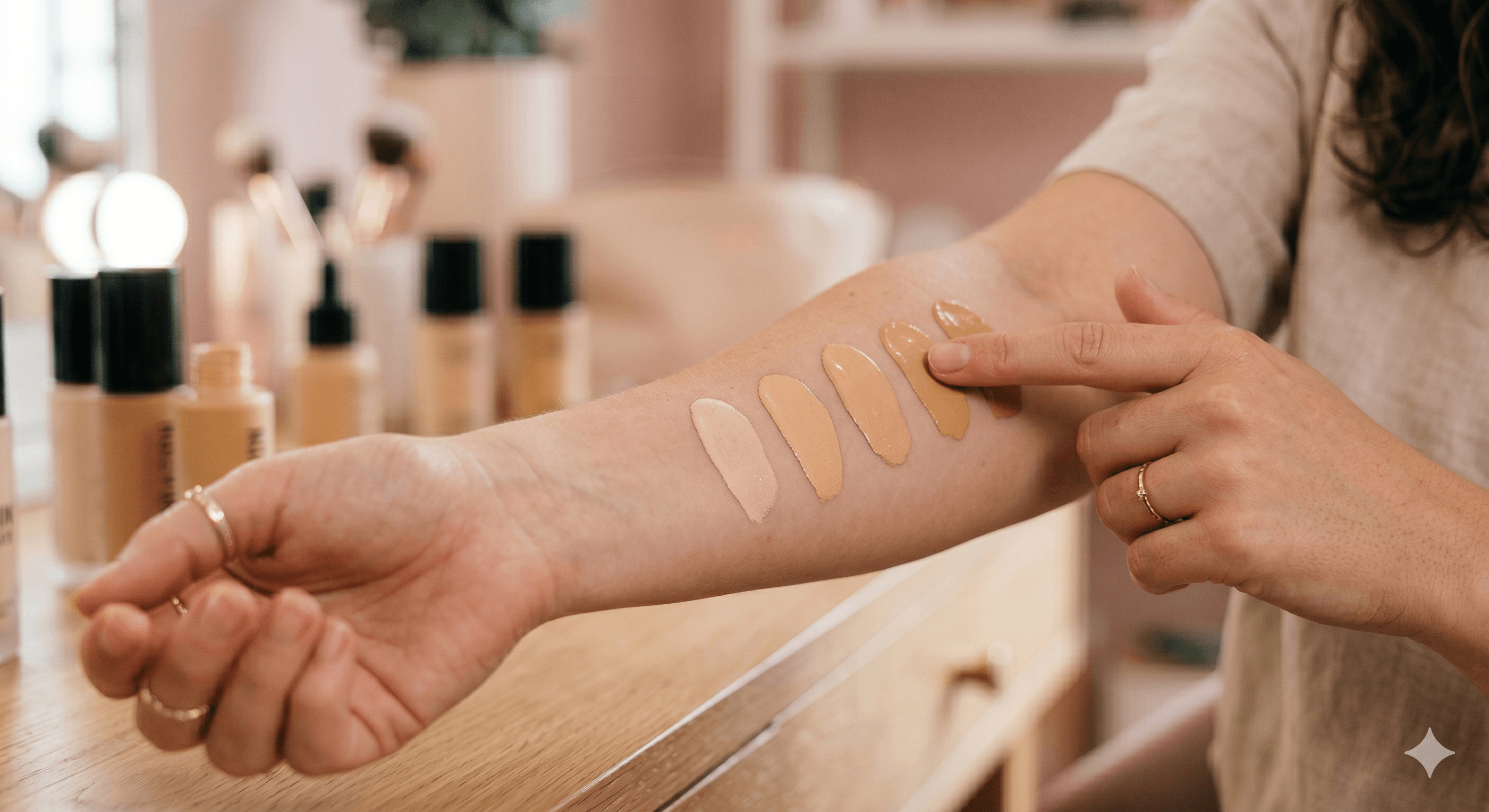
What's the best way to choose a foundation shade for vitiligo? Match the product to the surrounding, naturally pigmented skin rather than the depigmented patches, for a seamless, unified appearance across the face.
Achieving reliable cosmetic coverage for vitiligo is a process of experimentation, guided by the unique textures and tones of your own skin. This guide is informed by real, current community experience and practical cosmetic practice, and is not medical advice. For concerns about the underlying management of your skin condition, consult a qualified dermatologist.