Covering skin conditions such as redness, rosacea, couperose, acne, burn wounds or a port-wine stain should support your skin, not overwhelm it. Yet many people unknowingly make routine mistakes that lead to irritation, uneven coverage or makeup that doesn't last.
Below are the most common mistakes when covering visible skin differences, and how to correct them.
Mistake 1, skipping skincare and applying foundation first
One of the most frequent mistakes is applying foundation directly onto bare skin. Skin conditions are often linked to dehydration, sensitivity or a weakened skin barrier. Without proper preparation, makeup can cling to dry patches, settle into texture and make redness, acne scars or discoloration more visible rather than less.
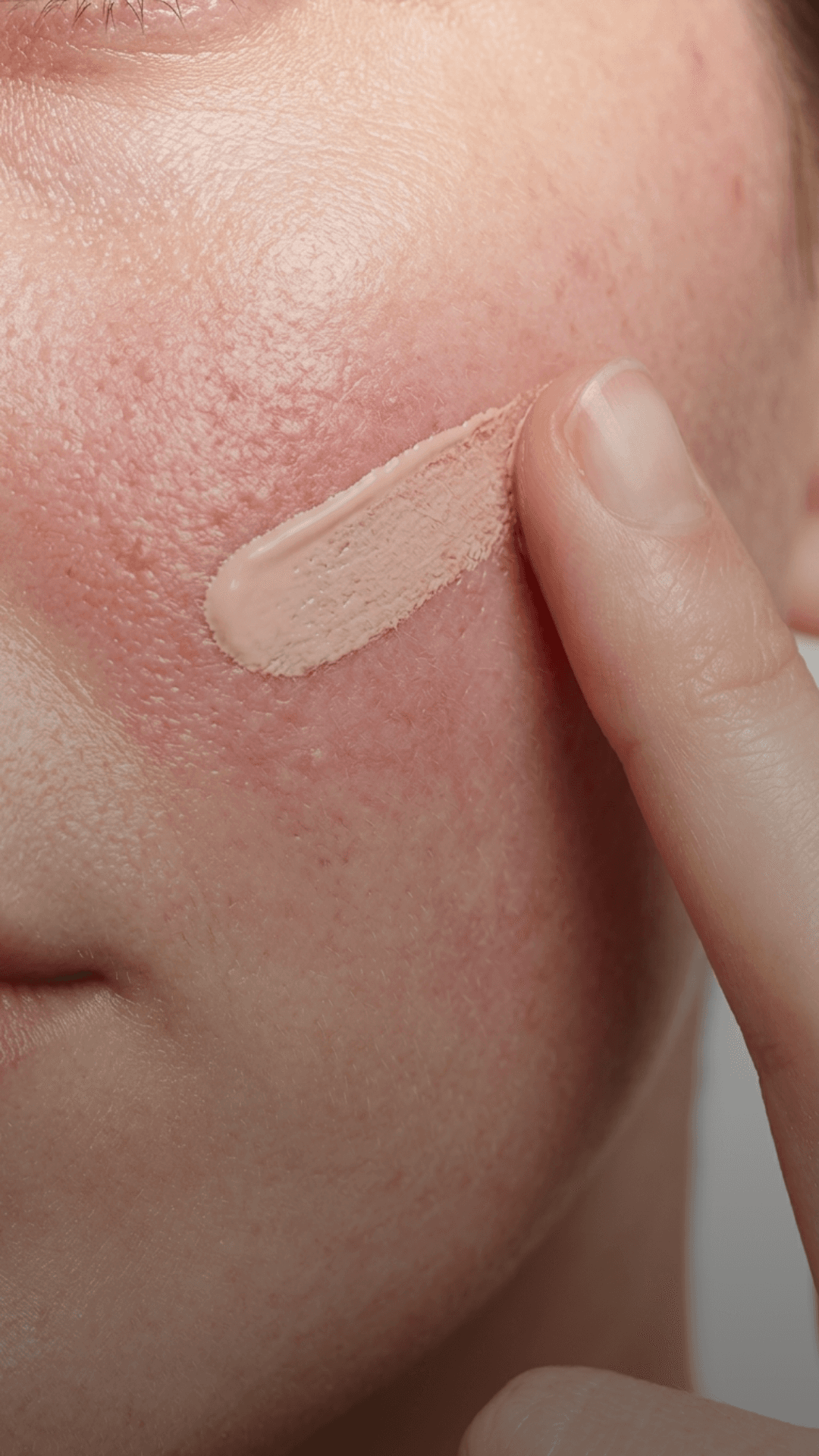
Always start with the CC Cream applied evenly to the entire face. Even when skin differences are localised, applying it across the full face ensures balance and a natural skin-like finish. The CC Cream hydrates, supports barrier repair and provides sun protection while offering light breathable coverage that helps neutralise redness.
Mistake 2, using too much foundation at once
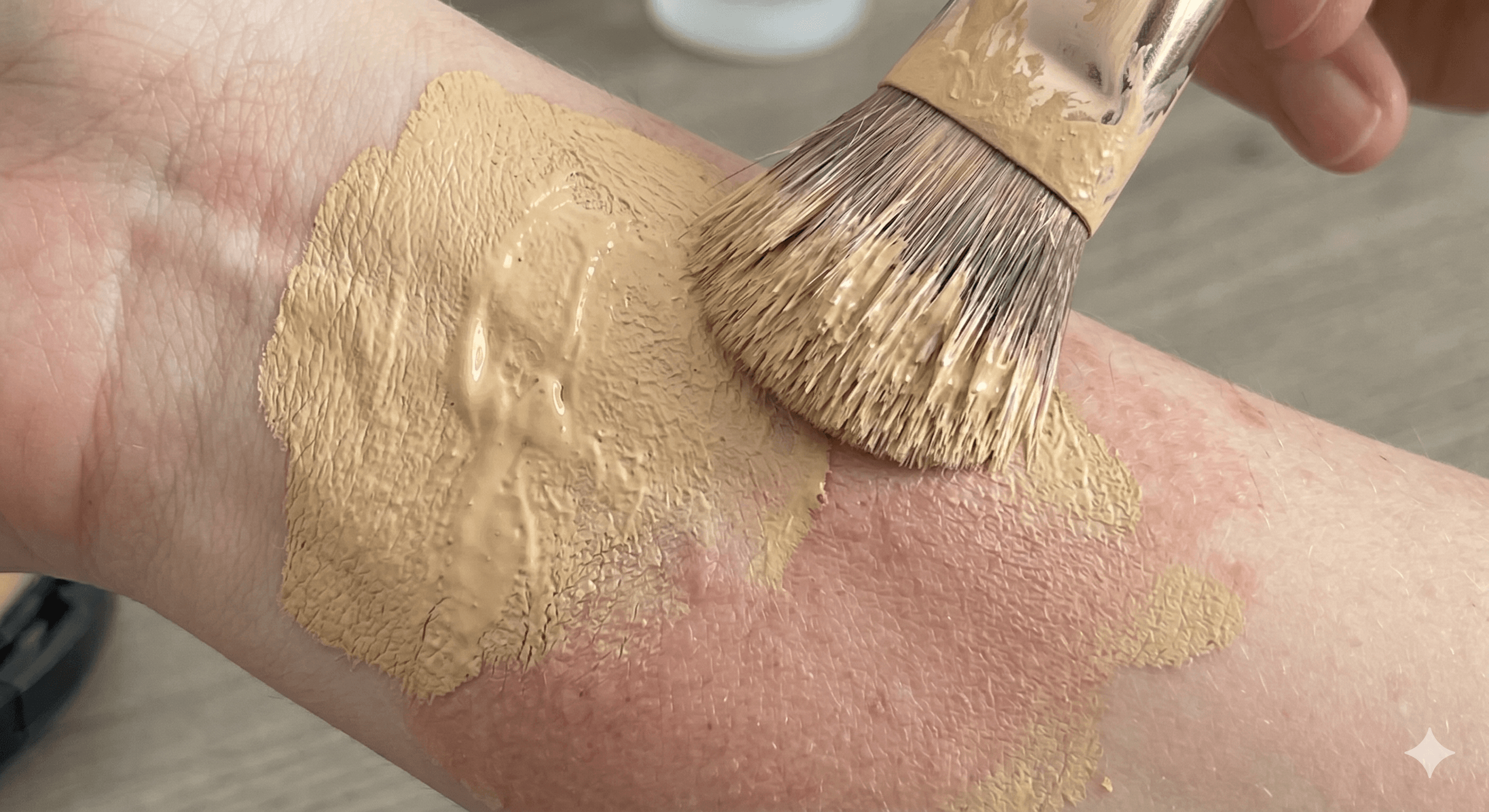
More coverage doesn't mean more product. A thick layer in one step often results in a heavy finish that draws attention to texture, acne scars or pigmentation.
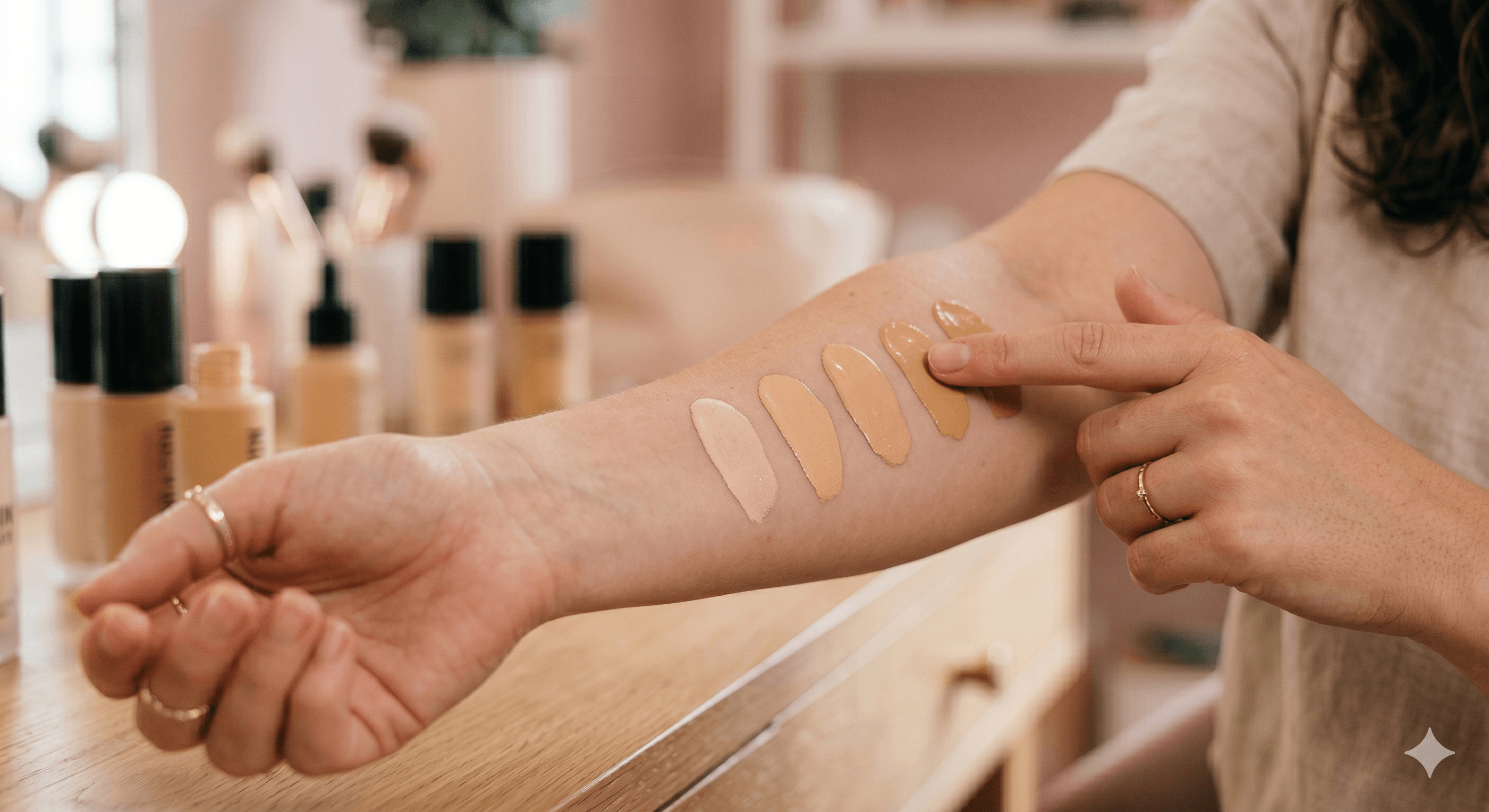
Build coverage gradually. After the CC Cream, use the Buildable Foundation only where needed. Focus on areas with visible redness, acne, burn wounds or a port-wine stain and layer slowly. Better coverage with less product, a natural appearance, improved comfort throughout the day.
Mistake 3, ignoring daily sun protection
Sun exposure is one of the most common triggers for redness flare-ups, pigmentation changes and prolonged inflammation. Skipping sun protection can worsen skin conditions over time even when makeup initially looks flawless.
Always include sun protection in your base routine. The CC Cream provides daily sun protection while correcting uneven tone at the same time, reducing the need for extra layers.
Mistake 4, choosing heavy and thick formulas
Many people assume that covering skin conditions requires thick, heavy makeup. In reality, dense formulas can trap heat, feel uncomfortable and aggravate sensitive skin.
Choose breathable, skin-supporting formulas that move with your skin. The Buildable Foundation feels lightweight while delivering true full coverage, feels light even with high coverage, stays flexible throughout the day, supports the skin rather than suffocates it.
Mistake 5, forgetting to set makeup correctly
Skipping the final step can cause makeup to shift, crease or fade, especially on areas with texture or discoloration. Finish with a light setting step: a setting powder for a soft blurred finish, or a setting spray for a natural flexible glow. Set lightly, without drying out the skin.
Covering skin conditions isn't about hiding your skin. It's about working with it. CC Cream first across the full face, Foundation only where needed and built gradually, light setting for longevity. Coverage that looks natural, feels comfortable, and respects your skin every day.