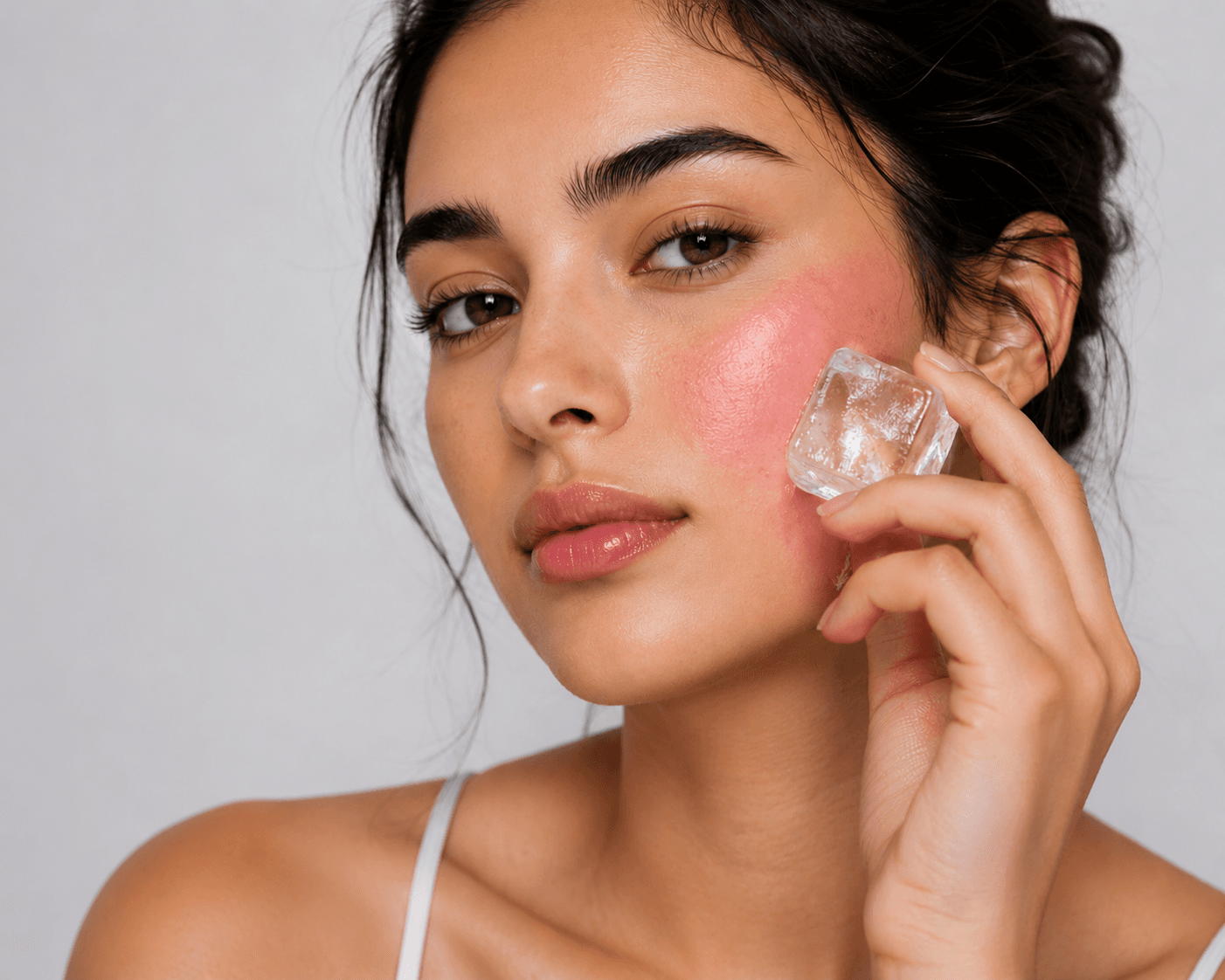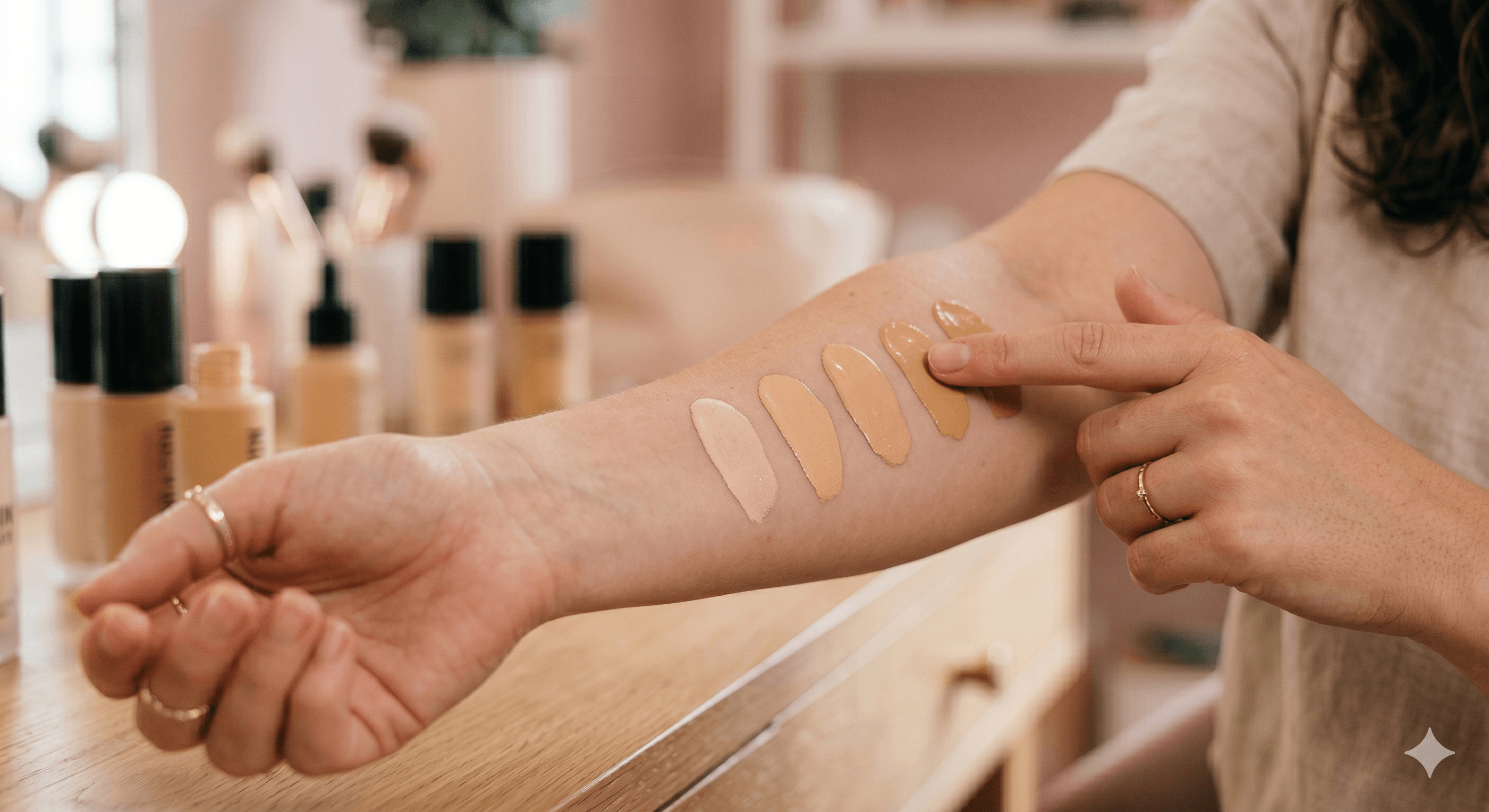
Finding the right foundation shade involves more than matching surface colour. For those with visible skin differences like redness, rosacea, acne scarring or port-wine stains, success depends on balancing colour intensity with skin undertone.
Why skin differences complicate shade selection
Skin differences aren't uniform. Redness varies in appearance, ranging from light to deep red or purple, depending on circulation, temperature and sensitivity. Additionally, everyone has an underlying undertone (neutral, warm, cool or olive). The interplay between undertone and redness intensity significantly affects how foundation appears on skin, which is why choosing a shade purely based on surface colour often leads to results that feel off.
Understanding intensity levels
Intensity directly determines correction needs. Light redness requires minimal neutralisation and blends easily, while darker reds need more balancing. Purple or bluish tones in cold conditions require different shade approaches to prevent ashy or dull appearances. The balance between too-light (which exaggerates redness) and too-dark (which appears heavy) is critical.
The importance of undertone
Undertone remains consistent even as redness fluctuates, making it equally important as intensity. A warm undertone with redness requires different shading than a cool undertone with identical redness levels. Proper undertone matching allows foundation to blend seamlessly rather than sitting atop skin.
Seasonal adjustments
Skin isn't static. Spring and summer increase sun exposure, softening redness appearance, while autumn and winter's colder temperatures deepen redness or shift it purple. Retaking the shade-match tool seasonally ensures continued accuracy.
The philosophy centres on choice and adaptability rather than perfection.